Orders@pcbamake.com

How DFM + DFA Help Reduce Rework in PCB Manufacturing and Assembly
In PCB fabrication and PCBA assembly, rework is one of the largest hidden costs. Every time a board must be repaired, production hours increase, delivery schedules are pushed back, and—more importantly—new risks may be introduced into the product.
For users who prioritize reliability, consistency, and long-term performance, minimizing rework is essential. This is exactly where DFM (Design for Manufacturability) and DFA (Design for Assembly) come into play.
When applied early in your project, these two disciplines can significantly reduce production errors and ensure a smoother, more predictable manufacturing workflow.
1. The Role of DFM in Real PCB Production
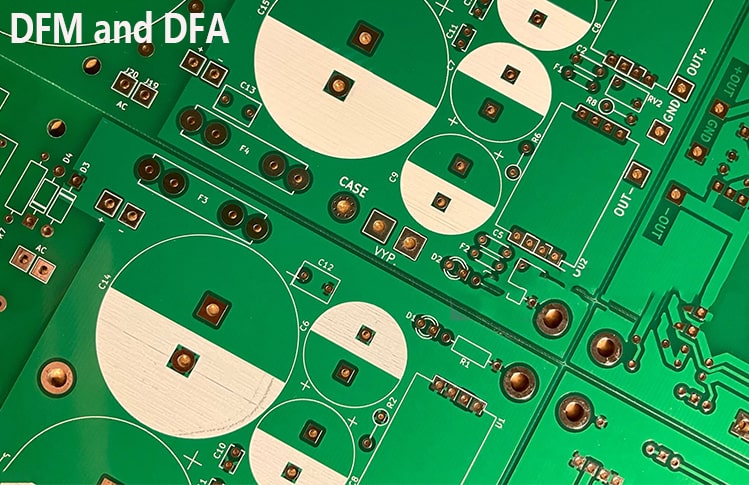
DFM focuses on optimizing PCB layout, stack-up, and overall structure so the board can be manufactured reliably. Many engineering issues do not originate from the Gerber files alone, but from design decisions that overlook real production constraints.
Typical rework-related problems caused by poor DFM include:
Trace width/spacing smaller than the factory’s process capability
Incorrect annular ring sizes for vias and pads
Poor solder mask opening design
These steps prevent defects during drilling, plating, imaging, and solder-mask processes—effectively eliminating costly shop-floor rework.
2. DFA: Ensuring Smooth and Stable PCBA Assembly
While DFM focuses on the PCB itself, DFA ensures components can be placed and soldered accurately. Assembly-related rework is often even more expensive, especially with BGAs, fine-pitch ICs, or double-sided boards.
By reviewing these items early, DFA helps prevent tombstoning, cold joints, misalignment, and opens.
DFA checks typically include:
IPC-compliant footprint verification
Spacing checks to meet SMT equipment requirements
Orientation and polarity consistency checks
Reflow simulation reviews
Solder-paste coverage evaluation
Mechanical stress assessment for connectors or heavy components
These measures reduce assembly-stage rework and stabilize overall yield.
3. How DFM + DFA Work Together to Reduce Rework
When combined, DFM and DFA create a strong framework for predictable, high-quality production.
Key benefits include:
Fewer production delays: Issues are prevented upfront rather than fixed afterward.
Higher First Pass Yield (FPY): Boards pass SMT, reflow, inspection, and test without manual repair.
Lower total manufacturing cost: Rework consumes materials, labor, and time—and may damage components. Eliminating rework reduces operational costs.
Improved long-term reliability: Reworked solder joints are more prone to failure; “zero-rework” builds result in stronger, more reliable electronics.
Better communication between customer and factory: DFM/DFA reviews help align expectations and avoid misunderstandings.
DFM and DFA are not optional engineering steps. They are fundamental to reducing rework and ensuring long-term product reliability. Factories that conduct thorough DFM and DFA reviews can significantly lower production risks and keep projects on track.
At PCBAmake, we integrate both DFM and DFA into every project—especially for complex PCBs, automotive modules, industrial control boards, and medium-volume production.
If you have PCB/PCBA/OEM/ODM needs, please contact us, We will reply within 2 hours, and complete the quotation within 4 hours or less upon request.
Delivery Services

Verified by

Link Us on