Orders@pcbamake.com

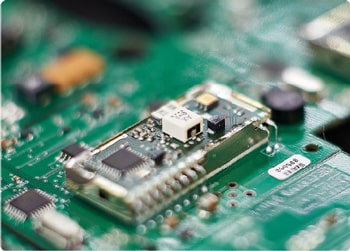
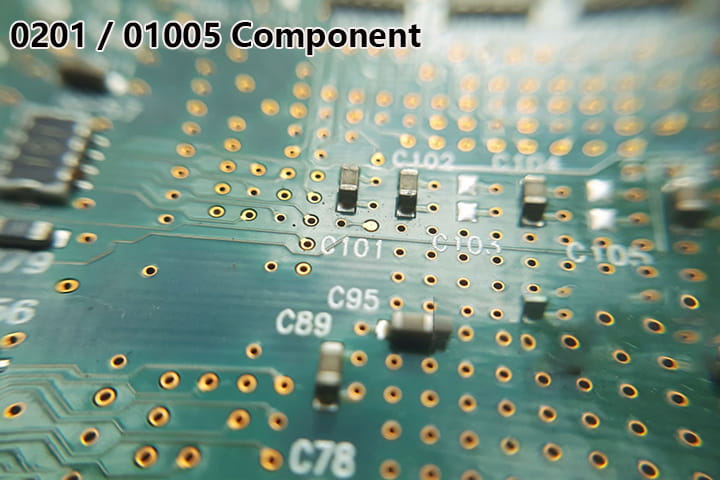
Ultra-miniature components such as 0201 and 01005 packages are widely used in high-density PCB designs.
1. High-Precision Pick and Place Equipment
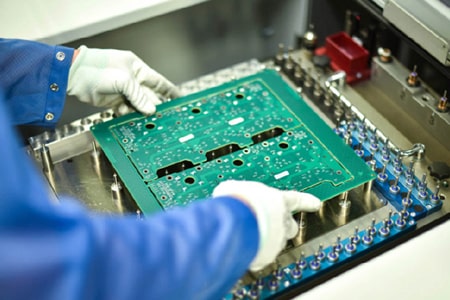
The most critical requirement for assembling micro components is placement accuracy.
For reliable 0201 and 01005 assembly, SMT machines must provide:
Precise solder paste printing helps prevent defects such as bridging, insufficient solder, or component shift during reflow.
3. SPI Solder Paste Inspection
Because solder pads are extremely small, 3D solder paste inspection (SPI) is widely used in advanced SMT lines.
SPI systems measure:
Key parameters include:Temperature ramp rate、Soak temperature、Peak reflow temperature、Cooling rate
Improper thermal profiles may lead to:Tombstoning、Component movement、Solder balls、Weak solder joints
For high-density boards, manufacturers usually perform thermal profiling for each PCB design to ensure consistent soldering quality.
5. PCB Design Requirements
Successful assembly of 0201 / 01005 components also depends on proper PCB design.
Recommended practices include:
For high-density designs, HDI PCBs with microvias and fine traces are often used to support these micro components.
6. Clean Production Environment
Micro components are sensitive to environmental conditions.
SMT production lines must maintain:Stable temperature and humidity、Clean manufacturing environment、ESD protection systemsSince 01005 components are extremely small, automated handling systems are required, as manual assembly is impractical.
Common Defects in 0201 / 01005 Assembly
Typical defects during micro-component assembly include:
TombstoningThese risks can be minimized through high-precision equipment, optimized printing processes, and automated inspection systems such as SPI and AOI.
Conclusion
As electronic devices continue to shrink, 0201 and 01005 component assembly has become essential for high-density PCB designs. Achieving reliable results requires advanced SMT equipment, precise solder paste printing, controlled reflow profiles, and well-designed PCBs.
Working with an experienced PCB assembly manufacturer ensures stable production quality and reduces manufacturing risks for complex electronics.
If you have PCB/PCBA/OEM/ODM needs, please contact us, We will reply within 2 hours, and complete the quotation within 4 hours or less upon request.
Delivery Services

Verified by

Link Us on