poe@pcbamake.com


HDI PCB DFM Guidelines: Key Design Considerations for High-Density Manufacturing
With the continuous miniaturization of electronic products, HDI (High-Density Interconnect) PCBs have become a standard solution for high-performance and space-constrained designs. However, many HDI projects encounter unexpected delays, yield loss, or cost overruns—not because of circuit design errors, but due to insufficient DFM (Design for Manufacturability) considerations.
What Makes HDI PCB Manufacturing More Challenging?
Compared to conventional multilayer PCBs, HDI boards typically involve:
Each of these factors significantly increases manufacturing complexity. Without proper DFM planning, even a well-designed HDI PCB can suffer from low yield and unstable reliability.
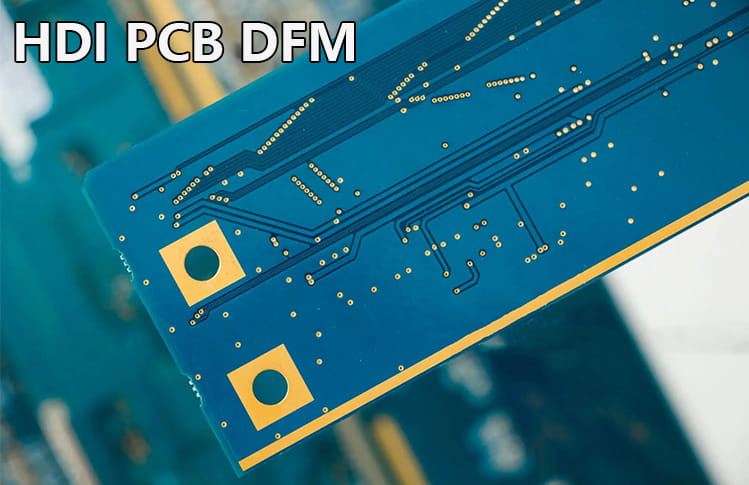
Key HDI PCB DFM Design Considerations
1. Microvia Size and Aspect RatioExcessively deep or stacked microvias increase the risk of incomplete plating and long-term reliability issues. In most cases, staggered microvias are more manufacturable than stacked microvias.
2. Via Stacking Strategy: Staggered vs. Stacked
While stacked microvias may reduce routing complexity, they:From a DFM standpoint, staggered microvia structures offer higher yield and better long-term stability, especially for volume production.
3. Inner Layer Trace Width Compensation
HDI PCBs often use very fine inner-layer traces. Designers should consider:
Leaving adequate manufacturing margin at the design stage significantly improves consistency in mass production.
4. Lamination Cycles and Cost ControlA good HDI DFM strategy balances routing density with a reasonable number of lamination cycles, rather than pushing design limits unnecessarily.
5. Early DFM Review with the Manufacturer
For HDI projects, DFM should start before layout finalization.
Early collaboration allows manufacturers to:
👉 Related reading: High Precision PCB DFM Checklist for Mass Production
Why HDI PCB DFM Matters for Mass Production
A design that works in prototype stage may still fail in volume manufacturing.
HDI DFM ensures:Stable yield,Predictable cost,Long-term product reliability。
For high-end applications such as automotive electronics, industrial control, and communication equipment, HDI DFM is not optional—it is essential.
If you have PCB/PCBA/OEM/ODM needs, please contact us, We will reply within 2 hours, and complete the quotation within 4 hours or less upon request.
Delivery Services

Verified by

Link Us on