Orders@pcbamake.com

Automotive Control Board PCBA
BGA packages are widely used in automotive control boards due to their high density, stable electrical performance, and strong thermal reliability. However, BGA assembly also introduces specific challenges that must be addressed to ensure long-term stability in harsh automotive environments.
Key Challenges in BGA Assembly
Solder Volume Accuracy
Incorrect solder paste deposition—too much or too little—can cause weak joints, bridging, or inconsistent connections. This often results from improper stencil design or printing accuracy.
Component Misalignment
BGAs can shift during pick-and-place or reflow, especially larger automotive-grade packages. Even slight misalignment may lead to opens or short circuits hidden under the component.
Voids in Solder Joints
Voids reduce heat dissipation and weaken mechanical strength. For automotive electronics exposed to high temperatures, excessive voiding is unacceptable and must be tightly controlled.
Hidden Defects
BGA joints are fully concealed, making visual inspection impossible. Issues such as head-in-pillow, insufficient solder, or cold joints require advanced inspection methods to detect.
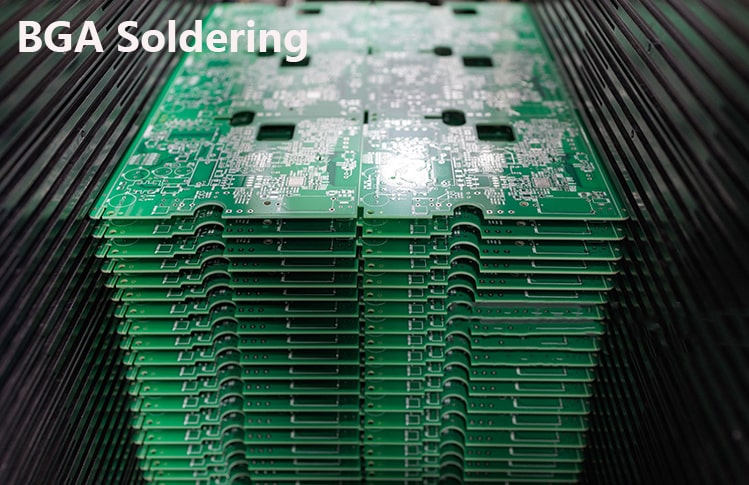
Our Solutions for Reliable BGA PCBA
Optimized Stencil Engineering
We design custom stencil apertures and thicknesses based on BGA pitch and ball size to achieve consistent solder paste volume.
High-Precision Placement
Advanced SMT equipment ensures accurate alignment, minimizing positional shift during placement and reflow.
Controlled Reflow Profiles
We create dedicated reflow curves for each automotive control board to reduce voids and ensure uniform wetting, including nitrogen reflow when required.
100% X-ray Inspection
All BGA assemblies undergo full X-ray inspection to identify voiding, misalignment, and hidden soldering defects.
Automotive-Grade Testing
Thermal cycling, vibration tests, and functional testing ensure every assembled control board meets long-term automotive reliability standards.
BGA technology is essential for modern automotive electronics, but its reliability depends on precise assembly and strict quality control. Through optimized processes, advanced inspection, and automotive-grade testing, we help global customers achieve stable and durable performance for their control boards.
If you have PCB/PCBA/OEM/ODM needs, please contact us, We will reply within 2 hours, and complete the quotation within 4 hours or less upon request.
Delivery Services

Verified by

Link Us on