poe@pcbamake.com


In today’s fast-paced electronics industry, bringing a product from concept to mass production requires far more than PCB design and a list of components. Efficiency, reliability, and supply chain stability have become critical considerations for global buyers. Turnkey PCB Assembly emerged as a comprehensive manufacturing model precisely to address these needs.
1. What Does “Turnkey” Mean in PCB Assembly?
In PCB manufacturing, “turnkey” refers to a service model in which the supplier manages the entire production process on behalf of the customer. This includes component sourcing, PCB fabrication, SMT and through-hole assembly, testing, packaging, and logistics.
Customers simply provide design files and specifications, and receive a fully assembled, ready-to-use circuit board.
Compared with coordinating multiple vendors, a turnkey approach eliminates communication gaps and process inconsistencies. The manufacturer assumes full responsibility for quality and on-time delivery.
2. Core Elements of a Complete Turnkey PCBA Service
a. Component Procurement & Supply Chain Management
The supplier purchases all components based on the customer’s BOM and ensures:
Procurement only from authorized distributors
Viable alternatives for EOL or long-lead-time parts
Cost-optimization suggestions for volume orders
A strong supply chain network is essential, especially during global shortages.
b. PCB Fabrication
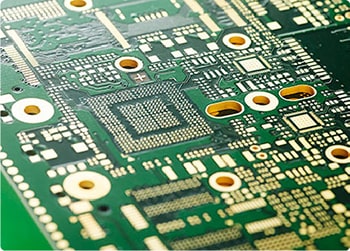
Turnkey services cover the full PCB manufacturing process, including:
Single-sided, multilayer, and high-frequency PCBs
Special materials such as Rogers laminates and aluminum substrates
ENIG, HASL, OSP, immersion silver, and other finishes
Advanced capabilities like impedance control and via-in-pad
When fabrication and assembly are managed under one system, transitions are smoother and errors are minimized.
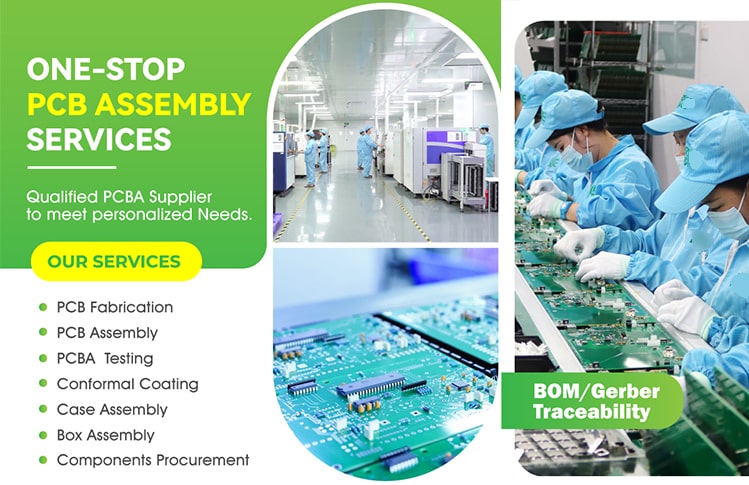
c. SMT and Through-Hole Assembly
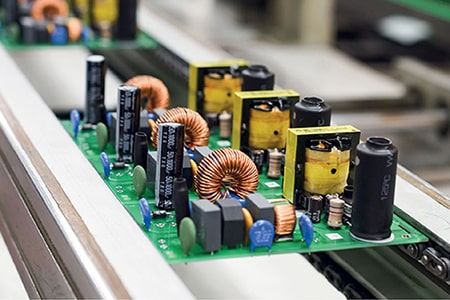
Turnkey assembly typically includes:
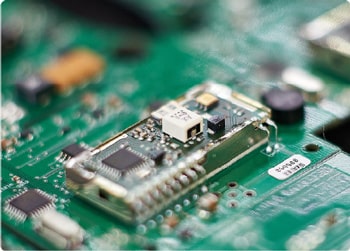
High-speed SMT placement
Fine-pitch packages such as QFN and BGA
Wave soldering and selective soldering
Reflow profile optimization based on component thermal requirements
Professional EMS providers also perform DFM reviews to identify manufacturability issues before production.
d. Testing & Quality Assurance
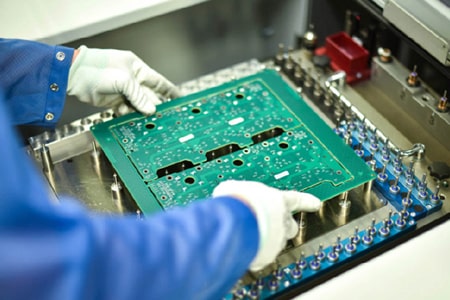
A complete testing plan may include:
AOI, SPI, and X-ray inspection
First Article Inspection (FAI)
ICT or flying-probe testing
Customer-specified functional testing (FCT)
These processes ensure each board meets performance requirements before shipment.
e. Packaging & Global Delivery
Finished PCBs are packed using anti-static and moisture-proof materials. Additional services may include:
Batch shipment
Rapid prototype delivery (24–72 hours)
Worldwide door-to-door logistics
This completes the full pathway—from design documents to final product.
3. Why Do Overseas Buyers Prefer Turnkey PCBA?
1) Significantly Reduced Communication & Process Complexity
A single supplier manages all stages, minimizing delays and miscommunication.
2) Faster Time-to-Market
Integrated manufacturing, sourcing, and assembly streamline the entire production cycle.
3) Lower Total Project Cost
Unified planning of materials, testing, and logistics reduces hidden costs.
4) Consistent Quality Control
Every step follows one standardized quality system, reducing risks of rework caused by supplier inconsistencies.
5) Stronger Risk Mitigation
With the supplier responsible for the entire process, issues such as component shortages or production errors can be addressed promptly.
4. Full Turnkey vs. Partial Turnkey
Full Turnkey:
The supplier manages all materials and production. Customers only provide design files and the BOM.
Partial Turnkey:
Customers provide certain components while the supplier handles the rest—ideal for buyers with specialized parts or existing inventory.
Both models are widely used, but full turnkey offers the highest convenience, cost savings, and timeline predictability.
5. When Should You Choose Turnkey PCBA?
Turnkey PCB assembly is ideal for:
New product prototypes and rapid iterations
Small-batch pilot production
Teams lacking internal engineering or sourcing resources
Complex boards requiring tight process coordination
Projects with strict delivery deadlines
If your priorities include speed, stable lead times, and simplified supply chain management, turnkey PCBA is often the best solution. PCBAMake is also a reliable choice for customers seeking a professional turnkey PCB assembly provider.
If you have PCB/PCBA/OEM/ODM needs, please contact us, We will reply within 2 hours, and complete the quotation within 4 hours or less upon request.
Delivery Services

Verified by

Link Us on