poe@pcbamake.com


For certain applications, it provides an excellent balance—but only when its limitations are well understood.
What Is Immersion Silver?
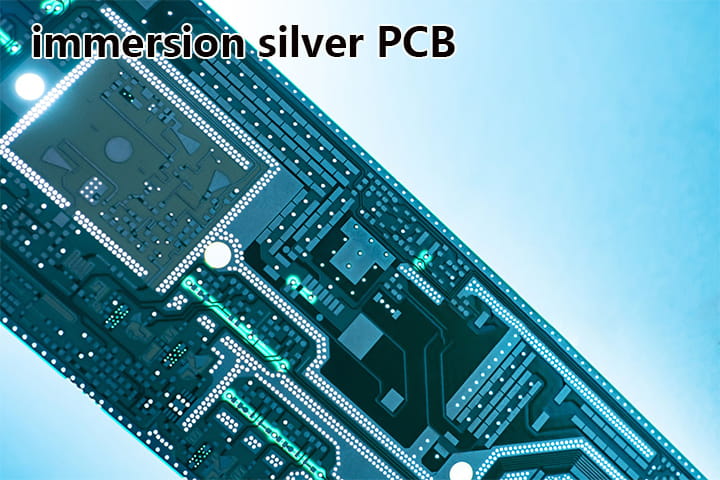
Immersion silver is a thin silver layer deposited directly on copper.
Unlike ENIG, it does not include a nickel barrier layer, which gives it different electrical and manufacturing characteristics.
Advantages of Immersion Silver in PCBA
1. Good Surface Flatness
Immersion silver offers a relatively flat surface, suitable for:QFN,Fine-pitch components,Medium-density SMT
It performs better than OSP in terms of initial solderability.
2. Signal Integrity Advantages
Because there is no nickel layer:
High-frequency signal loss can be lower
It is sometimes preferred in RF or high-speed designs
This makes immersion silver attractive for communication and networking products.
3. Moderate Cost Positioning
Cost-wise, immersion silver typically:
Costs less than ENIG
Costs more than OSP
It is often selected when ENIG is considered unnecessary but OSP is too risky.
Manufacturing Risks to Consider
1. Storage Sensitivity
Immersion silver is sensitive to:
Sulfur-containing environments
Improper packaging
Extended storage can degrade solderability.
2. Limited Multi-Reflow Capability
Compared with ENIG, immersion silver:
Is less tolerant of multiple reflow cycles
Requires tighter process control during PCBA
Best Application Scenarios for Immersion Silver
High-speed or RF applications
Medium-to-high density PCBA
Projects with controlled storage and logistics cycles
👉 If long storage or multiple reflows are required, ENIG may be a safer choice.
Related reading:
ENIG Surface Finish in PCBA: When Is ENIG the Best Choice?
OSP Surface Finish in PCBA: Cost vs Reliability
Immersion silver is a balanced solution when:
Signal performance matters
Cost must be controlled
Manufacturing conditions are well managed
It requires more discipline than ENIG—but rewards well-planned projects.
If you have PCB/PCBA/OEM/ODM needs, please contact us, We will reply within 2 hours, and complete the quotation within 4 hours or less upon request.
Delivery Services

Verified by

Link Us on