Orders@pcbamake.com

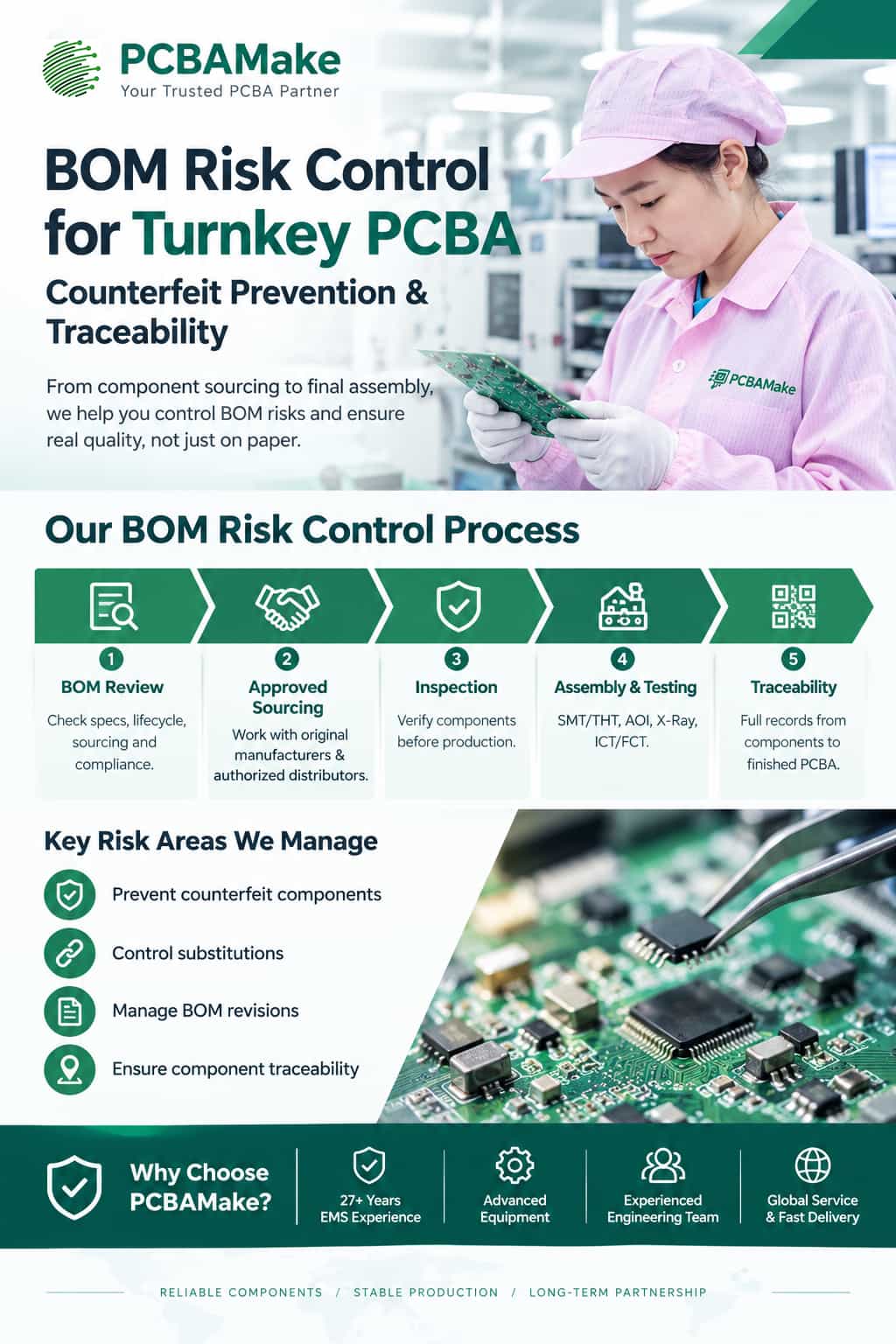
For turnkey PCBA projects, component sourcing is a critical part of quality and supply chain control. A reliable BOM management process should cover sourcing, authentication, substitution, and traceability.
1. BOM Risk Review
Before procurement, review:
High-risk parts such as MCUs, processors, memory, and obsolete components require additional verification.
2. Control Component Sources
A preferred sourcing path is:
Original Manufacturer → Authorized Distributor → Verified Secondary Source
Supplier records, packaging, markings, date codes, and lot information should be checked for critical components.
Avoid sourcing decisions based on price alone, especially when unusually low prices or unknown suppliers are involved.
3. Prevent Counterfeit Components
Common risks include remarked, recycled, refurbished, or incorrect components.
Incoming inspection should verify components before production. Depending on the component and project requirements, additional authenticity checks may be applied.
Counterfeit prevention should happen before assembly—not after a product failure.
4. Control Component Substitutions
A replacement part should not be approved based only on package or basic specifications.Alternative Proposed → Engineering Review → Customer Approval → BOM Update → Purchasing
5. Maintain Component Traceability
Component records should be linked to production batches.
Typical information includes:This makes it easier to identify affected batches if a component issue occurs.
6. Control BOM Revisions
All BOM changes, approved substitutions, and engineering revisions should be documented.
This prevents outdated BOMs, unauthorized components, and undocumented changes from entering production.For long-term PCBA programs, revision control is essential for maintaining consistency between production batches.
7. What Should Overseas Buyers Check?
Before choosing a turnkey PCBA supplier, ask:Effective BOM risk control connects component sourcing, counterfeit prevention, substitution management, and traceability into one process:
BOM Review → Approved Sourcing → Inspection → Assembly → Testing → Traceability
For export PCBA projects, this approach provides better control over component quality and reduces sourcing-related production risks.
PCBAMake supports turnkey PCBA with BOM engineering review, component sourcing, SMT/THT assembly, inspection, testing, and production support.
If you have PCB/PCBA/OEM/ODM needs, please contact us, We will reply within 2 hours, and complete the quotation within 4 hours or less upon request.
Delivery Services

Verified by

Link Us on