Orders@pcbamake.com

A PCB can be electrically correct and still be difficult or expensive to manufacture.
A proper PCB assembly DFM review identifies design issues before production, helping reduce rework, improve assembly efficiency, and avoid unnecessary manufacturing costs.
Use this PCB assembly DFM checklist to review your design before sending it to production.
12 PCB Assembly DFM Issues to Check
1. Component Spacing
Components placed too close together can cause solder bridging, placement difficulties, and inspection problems.
Spacing should be reviewed according to the capabilities of the intended PCB assembly process.
2. Incorrect Pad Design
Incorrect pad dimensions can result in insufficient solder, excessive solder, tombstoning, or poor solder joints.
This is especially important for fine-pitch components and advanced packages.
3. BGA and Fine-Pitch Components
BGA and fine-pitch packages require careful consideration of pad design, solder mask, routing, and assembly processes.
A DFM review can identify potential manufacturing problems before they become production defects.
4. Insufficient Board Edge Clearance
Components located too close to the PCB edge may interfere with SMT equipment, fixtures, depanelization, or final assembly.
Adequate edge clearance should be considered during PCB layout.
5. Component Orientation
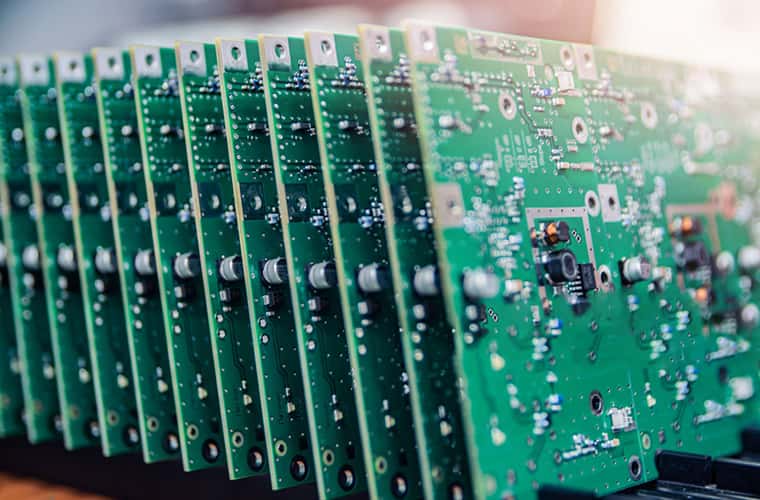
Consistent orientation helps improve automated assembly and reduces the risk of placement errors.
Pay particular attention to polarized components, LEDs, diodes, ICs, and connectors.
6. Missing Fiducial Marks
Fiducials provide reference points for automated SMT equipment and are particularly important for complex or high-density boards.
7. Poor Panelization
Effective PCB panelization can improve material utilization and **PCB assembly efficiency.
Poor panel design may increase handling time, complicate depanelization, or create board deformation risks.
8. Thermal Design
Large copper areas and components with different thermal characteristics can affect heat distribution during reflow.
Proper thermal design helps maintain consistent soldering performance.
9. Test Point Accessibility
If ICT or functional testing is required, test points should be considered during PCB design.
Poor test access may increase fixture complexity or require additional manual testing.
10. SMT and THT Assembly
Boards combining SMT and through-hole components require careful consideration of assembly sequence and soldering processes.
A DFM review can help reduce unnecessary manual operations and improve manufacturing efficiency.
11. Silkscreen Placement
Silkscreen should not overlap solder pads or obscure important component markings.
Clear reference designators also make assembly, inspection, and troubleshooting easier.
12. Complete Manufacturing Documentation
A production-ready PCB assembly project should include the necessary manufacturing information, such as:
* Gerber filesIncomplete or inconsistent files can delay engineering review and quotation.
How PCB Assembly DFM Helps Reduce Cost
A good PCB assembly DFM review can help:
* Reduce rework and production defectsThe earlier these issues are identified, the easier and less expensive they are to correct.
PCB Assembly DFM Checklist
Before production, review:
☐ Component spacingFinal Takeaway
Good PCB design is not only about electrical performance. It also needs to be optimized for **manufacturability, assembly efficiency, testing, and cost.
A professional PCB assembly DFM review can identify potential issues before production and help prevent avoidable manufacturing problems.
Not sure whether your PCB is production-ready? Submit your PCB files for a Free DFM Review before assembly.
If you have PCB/PCBA/OEM/ODM needs, please contact us, We will reply within 2 hours, and complete the quotation within 4 hours or less upon request.
Delivery Services

Verified by

Link Us on