Orders@pcbamake.com

At this stage, component MOQ and setup costs can have a greater impact on the effective unit cost.
A small production run may also require more flexibility in component sourcing and assembly processes.
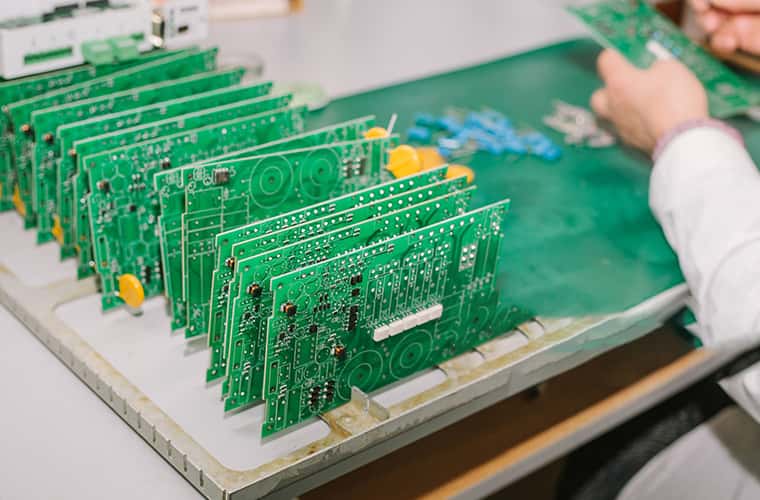
Once the design and process are stable, mass production focuses more heavily on:
At higher volumes, even a small improvement in assembly efficiency or component cost can have a significant impact on total production cost.
Key Differences: Small Batch vs. Mass Production
| Factor | Small Batch | Mass Production |
| Main goal | Validation & flexibility | Efficiency & consistency |
| Component sourcing | Flexible | Planned in advance |
| MOQ impact | Higher | Lower per unit |
| Process optimization | Developing | Highly optimized |
| Testing | Design validation | Repeatable production testing |
| Cost focus | Initial investment | Total unit cost |
| Quality control | Process verification | Continuous yield control |
There is no single production quantity that determines when a project should move from small batch to mass production.
A better indicator is whether the product has achieved:
The difference between small batch PCB assembly and mass production is not simply quantity.
Small batches prioritize flexibility and validation, while mass production emphasizes efficiency, supply chain planning, process consistency, and cost contro.
A well-planned transition can reduce manufacturing risks while creating a more predictable PCBA production process.
Planning your next production run? Contact PCBAMake for small-batch or mass-production PCB assembly support.
If you have PCB/PCBA/OEM/ODM needs, please contact us, We will reply within 2 hours, and complete the quotation within 4 hours or less upon request.
Delivery Services

Verified by

Link Us on