Orders@pcbamake.com


Component availability plays a critical role in PCB assembly lead times. Even with sufficient manufacturing capacity, a shortage of one critical component can delay an entire production batch.
For electronics manufacturers, managing component shortages is not just a procurement issue. It requires effective BOM assessment, alternative sourcing, and coordination between engineering and production teams.
How Component Shortages Impact Production Schedules
A PCB assembly project depends on the availability of its complete BOM. Missing critical components can affect production in several ways:MCUs, processors, memory ICs, and specialized connectors often require closer attention due to sourcing constraints and limited alternatives.
BOM Risk Assessment and Alternative Sourcing
Early BOM review helps identify potential supply risks before production begins.
Manufacturers should pay particular attention to single-source components, long-lead-time parts, and end-of-life components.
When alternatives are needed, evaluation should cover:
- Electrical and functional compatibilityAlternative components should undergo engineering verification and customer approval where required. An approved Alternative Vendor List (AVL) can also help reduce sourcing delays in recurring production.
How to Minimize Component-Related Delays
Effective material management requires close coordination between procurement, engineering, and manufacturing.
Key practices include:
Early procurement planning: Identify critical components and confirm availability before finalizing production schedules.
Reliable sourcing channels:Prioritize original manufacturers and authorized distributors to improve material traceability.
Flexible production scheduling:Adjust production sequences according to material readiness and consider phased deliveries when practical.
Inventory planning: Establish appropriate safety stock for critical components based on project forecasts and consumption.
These measures help reduce unexpected disruptions and improve delivery predictability.
Choosing a PCBA Partner with Strong Sourcing Capabilities
When selecting a PCB assembly manufacturer, buyers should look beyond SMT capacity and evaluate its supply chain management capabilities.
Important considerations include:
- BOM engineering review and sourcing risk assessmentA manufacturer offering PCB fabrication, component sourcing, and assembly under one coordinated process can simplify supplier management and reduce communication gaps.
Conclusion
Component shortages can affect every stage of PCB assembly, from material preparation to final delivery. Early BOM assessment, qualified alternative sourcing, and coordinated production planning are essential to minimizing these risks.
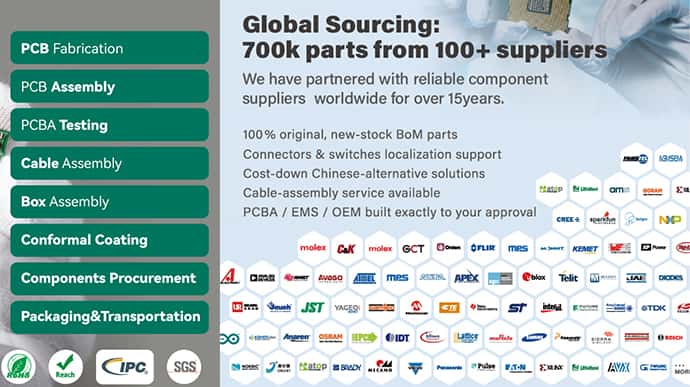
PCBAMake provides PCB fabrication, component sourcing, and PCB assembly services, supported by BOM engineering review and integrated production coordination to help customers manage sourcing challenges and maintain more predictable delivery schedules.
Frequently Asked Questions
1. Which components commonly cause PCB assembly delays?If you have PCB/PCBA/OEM/ODM needs, please contact us, We will reply within 2 hours, and complete the quotation within 4 hours or less upon request.
Delivery Services

Verified by

Link Us on