Orders@pcbamake.com

Component mismatches, soldering defects, unexpected delays…these are often rooted in design decisions that could have been identified earlier.
That’s where DFM (Design for Manufacturability) comes in.
For companies relying on outsourced PCB fabrication and assembly, DFM is not just a technical step—it’s a risk control mechanism that directly impacts cost, lead time, and product reliability.
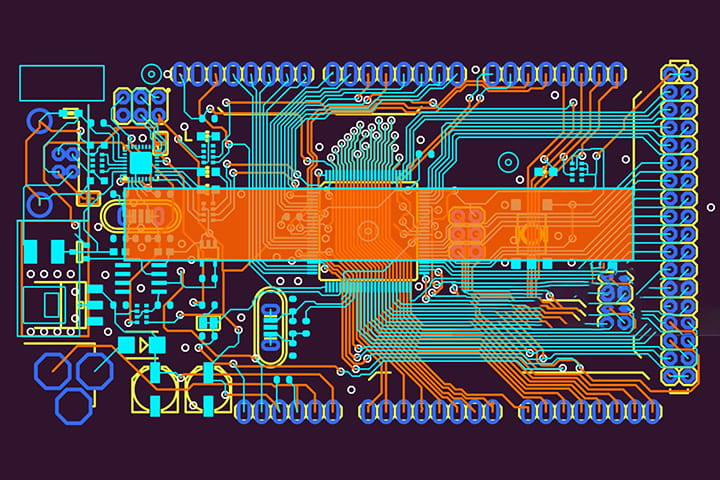
What Is DFM in PCBA?
DFM (Design for Manufacturability) is the process of reviewing your PCB design files before production to ensure they are optimized for:
Fabrication feasibility
Assembly efficiency
Yield and reliability
It bridges the gap between design intent and real-world manufacturing capability.
In practical terms, DFM answers one critical question:
Can this design be manufactured consistently, at scale, without issues?
Why DFM Is Critical in PCB & PCBA Projects
1. Prevent Costly Rework and Scrap
A small design issue—like incorrect footprint, insufficient spacing, or wrong polarity—can lead to:
Entire batch defects
Rework costs
Delayed delivery
When you scale from prototype to mass production, even a minor issue becomes a multiplied risk.
DFM helps catch these problems early—before they become expensive mistakes.
2. Improve Assembly Yield and Stability
For complex boards (e.g., BGA, QFN, HDI), assembly is highly sensitive to:
Pad design
Solder mask definition
Component placement density
Without proper DFM checks, you may face:
Tombstoning
Solder bridging
Voids under BGAs
A well-executed DFM ensures your design aligns with real assembly conditions, improving first-pass yield.
3. Optimize Lead Time
Production delays are often not due to factory capacity, but because of:
Back-and-forth clarification
File inconsistencies
Missing data
DFM streamlines this by:
Validating Gerber, BOM, and Pick & Place data
Identifying issues upfront
Reducing engineering queries
Faster approval = faster production start
4. Ensure Component Availability & Sourcing Feasibility
In today’s supply chain environment, component selection matters as much as design.
DFM includes:
Checking BOM completeness
Identifying obsolete or hard-to-source components
Suggesting alternatives
This is especially important for turnkey PCBA services, where procurement is part of the process.
5. Enhance Product Reliability
Manufacturability directly affects long-term performance.
For example:
Improper trace width → overheating
Poor thermal design → component failure
Inadequate spacing → short circuits
DFM ensures your board is not just manufacturable, but reliable in real-world use.
If you have PCB/PCBA/OEM/ODM needs, please contact us, We will reply within 2 hours, and complete the quotation within 4 hours or less upon request.
Delivery Services

Verified by

Link Us on