SMT Assembly for 0201 and 01005 Components: Equipment and Process Requirements Explained
As electronic products continue to move toward miniaturization and high-density integration, ultra-small components such as 0201 and 01005 packages are becoming increasingly common in advanced PCB designs.
However, assembling these components is far more challenging than standard SMT processes. It requires not only high-end equipment but also strict process control and engineering expertise.
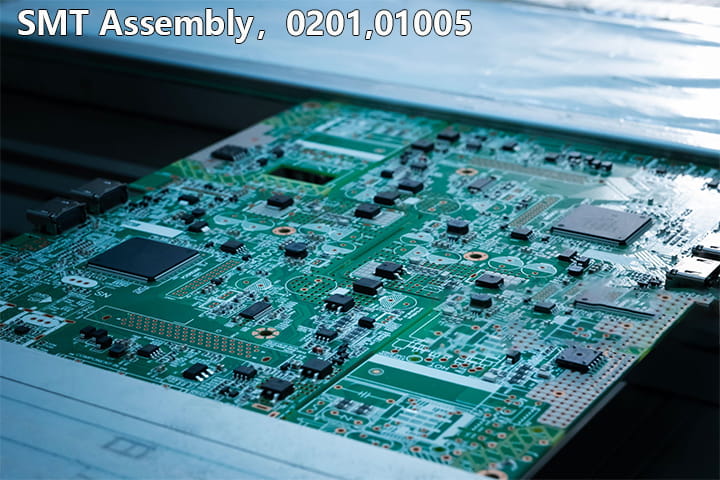
What Are 0201 and 01005 Components?
0201 and 01005 refer to extremely small SMD package sizes:
0201 (inch) = 0.6 mm × 0.3 mm
01005 (inch) = 0.4 mm × 0.2 mm
These components are widely used in:Wearable devices
Medical electronics
High-frequency communication modules
Compact consumer electronics
Due to their tiny size, even minor deviations in the SMT process can lead to defects such as tombstoning, misalignment, or insufficient soldering.
1. High-Precision SMT Equipment RequirementsUltra-High Accuracy Pick-and-Place MachinesFor 0201 and especially 01005 components, placement accuracy must reach:
±30 μm or better
High-speed vision alignment systems
Advanced nozzle design for micro-components
Modern machines from brands like Yamaha, Panasonic, or ASM are typically required.
High-Resolution SPI & AOI Systems
Inspection becomes critical at this scale:SPI (Solder Paste Inspection) ensures precise solder volume
AOI (Automated Optical Inspection) detects misalignment, bridging, and missing parts
For 01005, standard AOI may not be sufficient—3D AOI systems are often necessary.
2. Solder Paste Printing ChallengesStencil Design RequirementsStencil quality directly impacts yield:
Laser-cut + electro-polished stencil
Thickness typically 80–100 μm
Aperture design optimization (home plate / reduced opening)
Printing AccuracyHigh-precision stencil printers with alignment systems
Stable squeegee pressure and speed control
Clean stencil surface (automatic cleaning system recommended)
Even slight solder paste variation can cause tombstoning or insufficient solder joints.
3. Placement Process ControlNozzle and Feeder Optimization
Micro nozzles specifically designed for 01005
Stable feeder systems to avoid component shifting
Environmental Control
Temperature and humidity stability
Anti-static (ESD-safe) environment
Tiny components are highly sensitive to static and airflow disturbances.
4. Reflow Soldering Profile OptimizationReflow soldering must be precisely tuned:Controlled heating rate (avoid component movement)
Balanced temperature profile
Accurate peak temperature
Improper profiles can lead to:Tombstoning
Component shifting
Cold solder joints
Nitrogen reflow is often recommended to improve solder wetting and reliability.
5. PCB Design (DFM) ConsiderationsReliable assembly starts from design:
Symmetrical pad design
Controlled solder mask opening
Proper spacing between pads
Optimized panelization for stability
DFM (Design for Manufacturability) analysis is essential before production to prevent defects.
6. Common Defects and How to Avoid ThemTypical issues in 0201/01005 assembly include:
Tombstoning → caused by uneven solder force
Misalignment → due to placement or stencil issues
Insufficient solder → from poor paste control
Component loss → during reflow or handling
These defects can be minimized through:Precise equipment calibration
Process optimization
Real-time inspection and feedback
Why Choose a Professional PCB Assembly Partner?Not all PCB manufacturers are equipped to handle 01005 components. A reliable partner should offer:
Advanced SMT production lines
Experienced process engineers
Strict quality control (SPI + AOI + FCT)
Strong DFM support
At PCBAMake, we specialize in high-precision SMT assembly, including 0201 and 01005 components, ensuring high yield and consistent quality for your most demanding projects.
As electronic devices become smaller and more complex, the ability to assemble ultra-miniature components like 0201 and 01005 is no longer optional—it is a critical capability.
By combining advanced equipment, optimized processes, and strong engineering support, manufacturers can achieve reliable, high-yield production even at this micro scale.

 Orders@pcbamake.com