Orders@pcbamake.com

Quality inspection plays an essential role in every PCB assembly project.
Among the most common inspection methods are AOI (Automated Optical Inspection) and X-Ray Inspection.
Although both help identify manufacturing defects, they work in completely different ways.
Understanding the difference helps buyers avoid unnecessary costs while ensuring the right level of quality for their products.
What Is AOI?
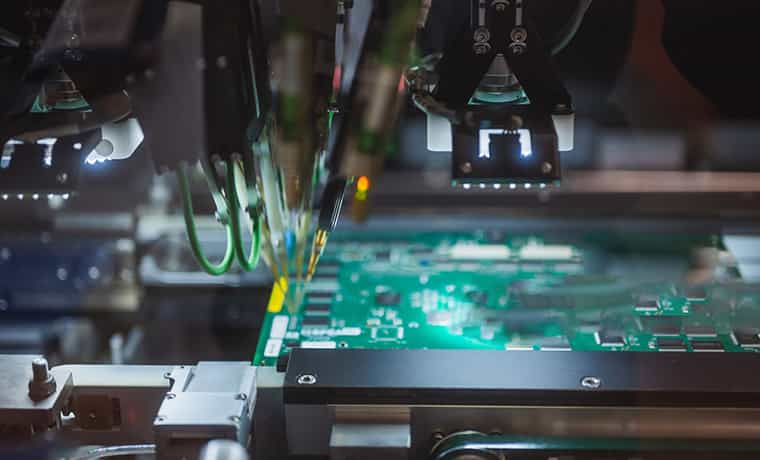
AOI uses high-resolution cameras to inspect the surface of assembled PCBs.
The system automatically compares each board with the expected design and identifies visible manufacturing defects.
AOI is one of the most widely used inspection methods in SMT production because it is fast, accurate, and highly automated.
What Can AOI Detect?
AOI is excellent at finding surface-level defects such as:
Because inspection is optical, AOI works best when solder joints are visible.
What Is X-Ray Inspection?
Unlike AOI, X-Ray inspection allows engineers to see inside the PCB.
Instead of cameras, the system uses X-rays to examine solder joints hidden beneath components.
This makes X-Ray essential for inspecting packages where visual inspection is impossible.
What Can X-Ray Detect?
X-Ray inspection is commonly used for:
Without X-Ray, many of these defects cannot be detected through conventional optical inspection.
AOI vs. X-Ray: Quick Comparison
| Feature | AOI | X-Ray | |
| Inspection Method | Camera | X-Ray imaging | |
| Visible Components | Excellent | Excellent | |
| Hidden Solder Joints | No | ||
| BGA Inspection | No | Excellent | |
| Inspection Speed | Fast | Slower | |
| Inspection Cost | Lower | Higher | |
| Best For | Standard SMT | Complex packages |
Do You Need Both?
In many professional PCB assembly projects, the answer is Yes.
AOI and X-Ray are not competing inspection methods—they complement each other.
AOI quickly identifies visible assembly defects, while X-Ray verifies hidden solder connections that optical systems cannot see.
Using both methods provides a more complete inspection process and significantly improves product reliability.
PCBAMake's Inspection Approach
At PCBAMake, inspection methods are selected according to the PCB design rather than using a fixed process for every order.
For standard commercial products, AOI may provide sufficient quality control.
For projects involving BGAs, fine-pitch components, or high-reliability applications, our engineering team may recommend combining AOI with X-Ray inspection to ensure hidden solder joints meet quality standards.
AOI and X-Ray each play an important role in modern PCB assembly.
AOI offers fast, cost-effective inspection for visible components, while X-Ray provides the only practical way to inspect hidden solder joints beneath advanced packages.
Choosing the right inspection method depends on your product complexity, quality requirements, and production goals.
If you're unsure which inspection strategy fits your project, working with an experienced PCB assembly partner can help ensure both product quality and manufacturing efficiency.
FAQ
Can AOI inspect BGA solder joints?No. Because the solder joints are hidden underneath the package, AOI cannot see them.
Is X-Ray required for every PCB?
No. X-Ray is mainly recommended for PCBs using BGA, QFN, or other components with hidden solder joints.
Which inspection method is faster?
AOI is generally faster and more cost-effective, while X-Ray provides deeper inspection for complex assemblies.If you have PCB/PCBA/OEM/ODM needs, please contact us, We will reply within 2 hours, and complete the quotation within 4 hours or less upon request.
Delivery Services

Verified by

Link Us on