Orders@pcbamake.com

When requesting a PCB assembly quotation, you've probably seen Functional Testing (FCT) listed as an optional service. If your project is still in the early stages, it's natural to ask:
"Do I really need Functional Testing, or is it just an extra cost?"
The answer is not every PCB assembly requires Functional Testing.
For some products, it provides significant value by reducing failures and improving product reliability. For others, it may add cost without delivering meaningful benefits.
Understanding when Functional Testing is necessary can help you make a better purchasing decision and avoid unnecessary manufacturing expenses.
What Is Functional Testing?
Functional Testing (FCT) verifies that an assembled PCB performs its intended function after assembly.
Unlike AOI, X-Ray inspection, or ICT—which focus on solder quality, component placement, or electrical connections—FCT powers on the board and checks whether it actually operates as expected.
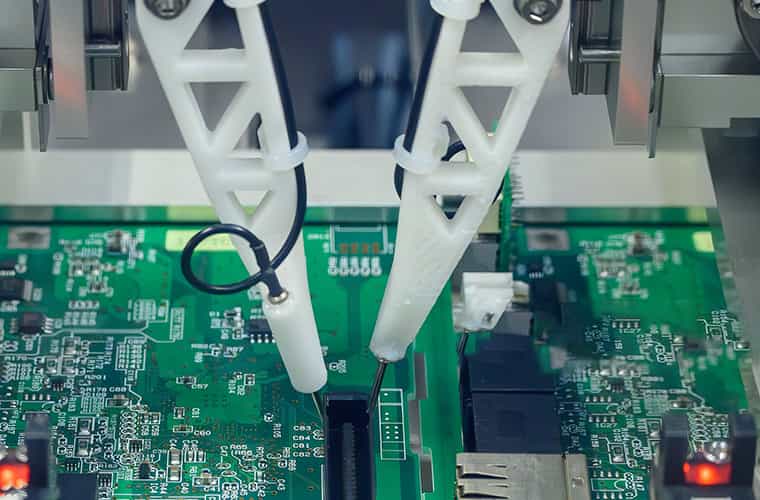
"Will this PCB work properly in the final product?"
Why Some Projects Skip Functional Testing
Although Functional Testing offers many advantages, it isn't always necessary.
For example, a simple PCB containing only basic power management circuits or passive components may not require a complete functional verification.
In these situations, quality can often be assured through:Adding Functional Testing may increase production time without significantly improving quality.
When Functional Testing Is Strongly Recommended
For more complex electronic products, Functional Testing becomes much more valuable.
It is generally recommended when your PCB includes:
Microcontrollers or Processors
If firmware controls the board, powering it on is the only way to confirm that programming and system initialization are working correctly.
Communication Interfaces
Products using USB, Ethernet, CAN Bus, RS232, Bluetooth, or Wi-Fi should verify that communication functions operate reliably before shipment.
Sensors
Industrial and medical products often rely on accurate sensor readings. Functional Testing helps confirm proper sensor response and signal processing.
Displays and User Interfaces
LCDs, touchscreens, buttons, LEDs, and other user interface components should be tested under actual operating conditions.
Safety-Critical Products
Automotive, medical, aerospace, and industrial control equipment typically require higher verification standards because failures can have significant consequences.
Does Production Volume Matter?
Absolutely.
The appropriate testing strategy often changes as production volume increases.
Prototype Builds
For prototypes, the primary goal is to validate the design.
Basic Functional Testing is usually recommended to confirm that the board powers on and performs its intended functions.
Small-Batch Production
Pilot production often benefits from Functional Testing because it helps identify issues before mass manufacturing begins.
Finding a firmware or communication problem early is much less expensive than correcting hundreds of assembled boards later.
Mass Production
For high-volume manufacturing, Functional Testing is frequently combined with AOI and ICT.
This layered inspection strategy improves production consistency and reduces field failure rates.
What Can Functional Testing Detect?
Some problems only appear after the PCB is powered on.
Examples include:
These issues are difficult—or impossible—to identify through visual inspection alone.
What Functional Testing Cannot Do
While Functional Testing is powerful, it isn't designed to detect every manufacturing defect.
For example, it may not immediately identify:
These defects are often better detected through ICT, AOI, or X-Ray inspection.
This is why many manufacturers use multiple inspection methods rather than relying on a single test.
A Practical Testing Strategy
Instead of applying the same inspection process to every project, consider matching the testing method to your product.
| Product Type | Recommended Testing |
| Simple LED or Power Boards | AOI + Visual Inspection |
| Consumer Electronics | AOI + Functional Testing |
| Industrial Equipment | AOI + ICT + Functional Testing |
| Medical Devices | AOI + X-Ray + ICT + Functional Testing |
| Automotive Electronics | Complete Inspection Strategy Including FCT |
The goal isn't to perform every available test—it's to perform the right tests.
How PCBAMake Helps Customers Choose
At PCBAMake, we understand that every project has different quality requirements.
Rather than applying a fixed inspection process, our engineering team reviews your PCB design, production volume, component types, and end application before recommending a testing strategy.
For some products, AOI and basic electrical verification may be sufficient
For more complex assemblies, we may recommend Functional Testing together with ICT or X-Ray inspection to improve long-term product reliability while keeping manufacturing costs under control.
So, do all PCB assmbly service need Functional Testing?
No.
However, many modern electronic products benefit greatly from it—especially those involving firmware, communication interfaces, embedded processors, or safety-critical applications.
The best testing strategy depends on the complexity of your product, production volume, and reliability requirements.
Working with an experienced PCB assembly manufacturer can help you choose the most effective inspection plan, ensuring product quality without paying for unnecessary testing.
FAQ
Is Functional Testing required for prototype PCB assembly?
In most cases, yes. Even a basic power-on and functional verification can help confirm that the design works before moving to larger production runs.
Can AOI replace Functional Testing?
No. AOI identifies visible assembly defects, while Functional Testing verifies that the PCB actually performs its intended function.
Is Functional Testing necessary for simple PCB assemblies?
Not always. Simple boards with limited functionality may only require AOI or ICT, depending on the design and quality requirements.
Can Functional Testing reduce product returns?
Yes. By identifying firmware, communication, and operational issues before shipment, Functional Testing helps reduce field failures and improve customer satisfaction.
If you have PCB/PCBA/OEM/ODM needs, please contact us, We will reply within 2 hours, and complete the quotation within 4 hours or less upon request.
Delivery Services

Verified by

Link Us on