Orders@pcbamake.com

A PCB may pass visual inspection, AOI, and even electrical verification—but will it actually work when powered on?
That's the question Functional Testing (FCT) is designed to answer.
Unlike inspections that focus on solder joints or component placement, Functional Testing verifies whether the assembled PCB performs exactly as intended under real operating conditions.
What Is Functional Testing?
Functional Testing is the final stage of electrical verification after PCB assembly.
The assembled board is powered on and tested using dedicated fixtures, software, or customer-defined procedures to simulate how it will operate in the finished product.
Instead of checking individual components, FCT evaluates the complete system.
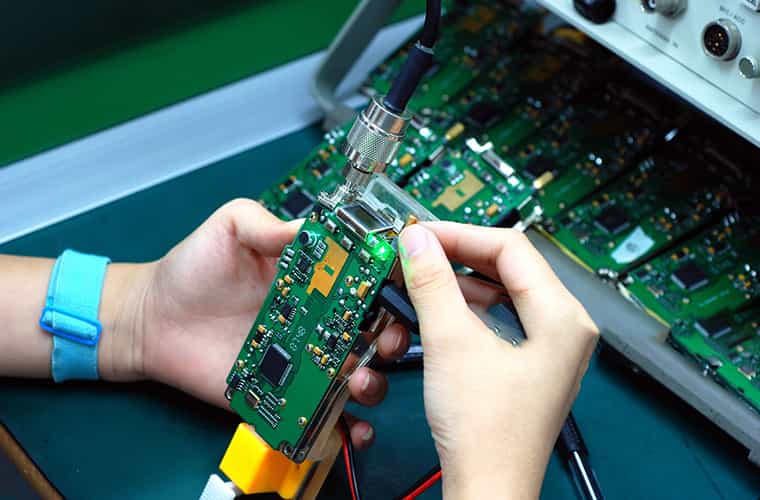
What Does FCT Test?
Each test is customized according to the product's functional requirements.
Why Is Functional Testing Important?
These defects are difficult—or impossible—to detect through visual inspection alone.
Functional Testing helps identify these issues before products reach customers.
Advantages of FCT
Verifies Real Product Performance
The PCB is tested under conditions similar to actual use.
Reduces Field Failures
Products are less likely to fail after installation.
Improves Customer Confidence
Many OEMs require Functional Testing to ensure consistent product quality.
Supports Complex Electronics
Products containing processors, communication modules, displays, or sensors often benefit significantly from FCT.
Does Every PCB Need Functional Testing?
Not always.
Simple LED boards or basic power modules may not require full Functional Testing.
However, FCT is highly recommended for products involving:
As electronic products become more intelligent, Functional Testing has become increasingly important.
FCT vs Other Inspection Methods
AOI and X-Ray help identify manufacturing defects, while ICT checks electrical connections.
Functional Testing goes one step further by confirming that the finished PCB actually performs its intended function.
For critical products, manufacturers often combine multiple testing methods to achieve the highest level of reliability.
How PCBAMake Performs Functional Testing
PCBAMake develops customized Functional Testing solutions based on customer requirements.
Depending on the project, our engineers can assist with fixture design, test procedure development, firmware verification, and production testing to ensure each assembled board meets the required performance standards before shipment.
Functional Testing is often the final quality checkpoint before a PCB leaves the factory.
By verifying real operating performance, FCT helps reduce product failures, improve customer satisfaction, and ensure every board performs as expected in its final application.
For complex electronic products, Functional Testing is not just an additional service—it is an important investment in long-term product reliability.
If you have PCB/PCBA/OEM/ODM needs, please contact us, We will reply within 2 hours, and complete the quotation within 4 hours or less upon request.
Delivery Services

Verified by

Link Us on